Practical beekeeping guides, organized around the questions you face in the apiary. Choose a topic, browse the summaries, and open an article for the full guide and downloadable sheets.
Hive Inspections & Management
Routine inspections, colony space, warning signs and everyday apiary work.
-

Does Your Hive Need Another Box? — Brood Box or Honey Super
Read the article →: Does Your Hive Need Another Box? — Brood Box or Honey SuperAssess colony space and understand when another brood box or honey super may be useful.
-

Hive Warning Signs — Possible Causes and What to Check
Read the article →: Hive Warning Signs — Possible Causes and What to CheckFour free illustrated beekeeper sheets covering entrance activity, food, brood diseases, queen problems, mites, pests and winter moisture.
-

Is Your Hive Being Robbed? — Signs, Action and Prevention
Read the article →: Is Your Hive Being Robbed? — Signs, Action and PreventionRecognize robbing activity and review practical ways to protect a colony and reduce further pressure.
-

Using a Bee Smoker — Fuel, Technique and Safety
Read the article →: Using a Bee Smoker — Fuel, Technique and SafetyReview smoker fuel, lighting, gentle use and fire precautions before opening a hive.
-

When to Check Your Hive — Inspection Timing and Warning Signs
Read the article →: When to Check Your Hive — Inspection Timing and Warning SignsChoose suitable inspection timing and recognize warning signs that call for closer attention.
Browse all Hive Inspections & Management articles · Back to topics ↑
Feeding & Water
Sugar feeding, protein supplements, water and food delivery.
-

Easy Spring and Fall Sugar Syrup
Read the article →: Easy Spring and Fall Sugar SyrupA visual guide to spring and fall syrup ratios, measuring by weight, and feeder hygiene.
-

Feeding Bees for Winter
Read the article →: Feeding Bees for WinterA cold-climate guide to fall stores, emergency feed, and keeping food within reach.
-

Feeding Your Bees — Sugar Syrup or Dry Sugar?
Read the article →: Feeding Your Bees — Sugar Syrup or Dry Sugar?Compare sugar syrup and dry sugar, and match the feed to the season and the colony’s needs.
-

How Much Honey Should You Leave for Winter?
Read the article →: How Much Honey Should You Leave for Winter?Plan winter honey reserves around your climate, colony size and the wait for dependable spring nectar.
-

Pollen and Protein Patties — What to Feed and When
Read the article →: Pollen and Protein Patties — What to Feed and WhenFeed according to colony needs and available natural pollen. This sheet explains when protein patties can help, how protein differs from sugar, and how to manage portions and leftovers.
-

Water for Your Bees — Reliable Supply, Safe Footing and Maintenance
Read the article →: Water for Your Bees — Reliable Supply, Safe Footing and MaintenanceProvide a dependable water source with safe footing, suitable placement and regular maintenance.
-

Ways to Feed Sugar Syrup to Honey Bee Hives
Read the article →: Ways to Feed Sugar Syrup to Honey Bee HivesCompare syrup-feeding methods and consider placement, access and practical feeder management.
-

When and How to Check Winter Food Stores
Read the article →: When and How to Check Winter Food StoresLearn when to heft your hive, check food access and provide emergency feed as reserves decline.
-

Winter Bee Feed and Supplements
Read the article →: Winter Bee Feed and SupplementsA comparison of winter feed, fondant, pollen and protein supplements for cold and warm climates.
Winter Care
Winter preparation, food reserves, insulation and seasonal survival.
-

Bee Winter Behavior and Roles
Read the article →: Bee Winter Behavior and RolesExplore winter clustering, heat production, colony roles and the importance of stored food.
-
Feeding Bees for Winter
Read the article →: Feeding Bees for WinterA cold-climate guide to fall stores, emergency feed, and keeping food within reach.
-
How Much Honey Should You Leave for Winter?
Read the article →: How Much Honey Should You Leave for Winter?Plan winter honey reserves around your climate, colony size and the wait for dependable spring nectar.
-

Is Your Hive Winter Ready? — Checklist
Read the article →: Is Your Hive Winter Ready? — ChecklistA practical winter checklist covering fall mite control, food reserves, colony health, hive-top insulation, wraps and winter monitoring.
-

Meet the Winter Bees
Read the article →: Meet the Winter BeesThe seasonal changes that help winter workers carry a colony into spring.
-
When and How to Check Winter Food Stores
Read the article →: When and How to Check Winter Food StoresLearn when to heft your hive, check food access and provide emergency feed as reserves decline.
-

Why Wrap Your Beehive for Winter?
Read the article →: Why Wrap Your Beehive for Winter?Winter wrapping, insulation, wind protection, and moisture considerations.
-
Winter Bee Feed and Supplements
Read the article →: Winter Bee Feed and SupplementsA comparison of winter feed, fondant, pollen and protein supplements for cold and warm climates.
-

Winter Bees: How They Survive and Why They Live So Long
Read the article →: Winter Bees: How They Survive and Why They Live So LongWinter bee series, part 1: longevity, colony roles, clustering, and the spring handoff.
-

Winter Survival: What Puts Your Bees at Risk?
Read the article →: Winter Survival: What Puts Your Bees at Risk?Winter bee series, part 2: mites, inaccessible food, weak colonies, nutrition, cold, and condensation.
Queens & Colony Growth
Queen status, mating, introduction, bee varieties, swarming and splits.
-

Better Queens May Start with a Better Egg
Read the article →: Better Queens May Start with a Better EggExplore research on how egg size and maternal investment may influence queen development and later colony performance.
-

Buckfast Honey Bees
Read the article →: Buckfast Honey BeesLearn about Buckfast breeding stock, its history and why the particular breeding line matters.
-

Carniolan Honey Bees
Read the article →: Carniolan Honey BeesExplore Carniolan honey bees, spring buildup and the need to manage colony space and swarm pressure.
-

Caucasian Honey Bees
Read the article →: Caucasian Honey BeesReview Caucasian honey-bee traits, propolis production and considerations when choosing a breeding line.
-

European Dark Honey Bees
Read the article →: European Dark Honey BeesLearn about European dark honey bees, wintering characteristics, lineage and variation in temperament.
-

Hive Swarm Warning Signs
Read the article →: Hive Swarm Warning SignsRecognize occupied queen cells, crowding and other signs of swarm preparation. Empty queen cups and bearding alone do not prove a colony will swarm.
-

Honey Bee Varieties — Guides and Comparison
Read the article →: Honey Bee Varieties — Guides and ComparisonCompare honey-bee stocks and breeding traits, with practical questions to ask before choosing bees.
-

How Does a New Queen Mate?
Read the article →: How Does a New Queen Mate?A practical guide to queen maturation, mating flights and checking for normal worker brood. Timing depends on weather and available drones; the sheet includes a late-fall warning for Northeast beekeepers.
-

Introducing a Purchased Queen
Read the article →: Introducing a Purchased QueenPrepare a colony for a purchased queen and review introduction, acceptance and follow-up checks.
-

Is Your Hive Queenless?
Read the article →: Is Your Hive Queenless?Recognize signs of queenlessness and decide what to check before introducing a replacement queen.
-

Italian Honey Bees
Read the article →: Italian Honey BeesReview Italian honey-bee traits, brood production and practical management considerations.
-

Making a Simple Split — A Five-Frame Nuc
Read the article →: Making a Simple Split — A Five-Frame NucFollow the basic arrangement of a five-frame nuc and the checks needed when making a simple split.
-

Mark Your Queen — Identification and Preparation
Read the article →: Mark Your Queen — Identification and PreparationA practical queen-marking guide covering the international color code, careful handling, and matching holding cages to hive numbers. Marking makes the queen easier to find; it does not protect her from heat.
-

Queen Cells — Identify the Situation and Act
Read the article →: Queen Cells — Identify the Situation and ActCompare swarm, supersedure and emergency queen cells, then use the inspection checklist to decide what to do next. Inspect the colony before removing queen cells.
-

Saskatraz Honey Bees
Read the article →: Saskatraz Honey BeesExplore the Saskatraz breeding population, reported traits and the importance of breeder and family differences.
Browse all Queens & Colony Growth articles · Back to topics ↑
Bee Health, Diseases & Safety
Brood diseases, colony defenses, pesticide exposure and sting safety.
-

American Foulbrood — Recognition and Prevention
Read the article →: American Foulbrood — Recognition and PreventionLearn the warning signs of American foulbrood and why persistent spores require special care. Stop moving suspect material between colonies and seek confirmation before treatment or disposal.
-

Bee, Wasp and Hornet Stingers
Read the article →: Bee, Wasp and Hornet StingersCompare bee, wasp and hornet stingers and understand why repeat-sting ability does not determine medical risk.
-
Can Scent Repellents Protect Honey Bees from Pesticides?
Read the article →: Can Scent Repellents Protect Honey Bees from Pesticides?How scent repellents might protect honey bees: computer screening, seven field-tested compounds, known results and important limits.
-

Chalkbrood — Recognition, Brood Temperatures and Prevention
Read the article →: Chalkbrood — Recognition, Brood Temperatures and PreventionTwo complementary sheets: a brood-temperature guide and a general recognition and colony-support guide. Chilling increases susceptibility, but temperature ranges are reference points rather than exact disease cutoffs.
-

Don’t Spray the Bee Buffet
Read the article →: Don’t Spray the Bee BuffetProtect flowering plants and pollinators from weedkiller and insecticide exposure.
-

European Foulbrood — Recognition, Prevention and Colony Support
Read the article →: European Foulbrood — Recognition, Prevention and Colony SupportRecognize warning signs in open brood, reduce spread, and support the colony. Confirm suspected foulbrood with appropriate testing and apiary-inspector advice.
-

Foulbrood — American and European Compared
Read the article →: Foulbrood — American and European ComparedA practical comparison of American and European foulbrood: causes, typical signs, prevention and immediate steps when disease is suspected. Illustrations show typical signs, not diagnostic photographs.
-

More Than a Home — The Hive’s Layers of Natural Defense
Read the article →: More Than a Home — The Hive’s Layers of Natural DefenseHoney, propolis, pollen, wax and the bees themselves contribute different antimicrobial defenses. This illustrated sheet explains the 2026 research and its limits; laboratory findings do not establish a disease cure or a Varroa treatment.
-

Nosema: Symptoms, Testing and Solutions
Read the article →: Nosema: Symptoms, Testing and SolutionsA downloadable beekeeper reference covering Nosema symptoms, testing, practical management options and heat research.
-

Pesticides Don’t Always Stop With the Pest — Protecting Bees & Beneficial Insects
Read the article →: Pesticides Don’t Always Stop With the Pest — Protecting Bees & Beneficial InsectsExplore pesticide exposure beyond the target pest and ways to protect bees and other beneficial insects.
-

Roundup and Bees — Check the Actual Product
Read the article →: Roundup and Bees — Check the Actual ProductCheck the actual herbicide formulation and label, and distinguish ingredient research from claims about an entire brand.
-

Tracheal Mites — Heat Sensitivity and Control Evidence
Read the article →: Tracheal Mites — Heat Sensitivity and Control EvidenceLaboratory heat results, historical prevalence and other control evidence for Acarapis woodi. Laboratory findings are distinguished from a validated whole-hive treatment protocol.
-

What Happens When a Honey Bee Stings You?
Read the article →: What Happens When a Honey Bee Stings You?Understand what happens during a honey-bee sting and review prompt stinger removal and response guidance.
Browse all Bee Health, Diseases & Safety articles · Back to topics ↑
Pests & Predators
Wax moths, ants, wasps, hornets and robbing prevention.
-

Ants in the Hive: What to Do
Read the article →: Ants in the Hive: What to DoPractical steps for assessing ant activity, removing food spills, and protecting hive stands.
-
Is Your Hive Being Robbed? — Signs, Action and Prevention
Read the article →: Is Your Hive Being Robbed? — Signs, Action and PreventionRecognize robbing activity and review practical ways to protect a colony and reduce further pressure.
-

Know Your Ants: Identification and Hive Risks
Read the article →: Know Your Ants: Identification and Hive RisksIdentify common ant groups, compare risks, and recognize when hive visitors need attention.
-

Large Hornets and Your Hive — What U.S. Beekeepers Need to Know
Read the article →: Large Hornets and Your Hive — What U.S. Beekeepers Need to KnowCompare large hornets, their risks to colonies and appropriate identification and reporting steps.
-

Protect Your Drawn Comb — B402 Wax Moth Prevention
Read the article →: Protect Your Drawn Comb — B402 Wax Moth PreventionProtect stored comb from young wax moth larvae with B402 labeled for that use. Stored frames only: do not spray bees or apply inside an occupied hive. Follow the current container label for application, drying and protective equipment.
-

Stop Wax Moths — Protect Your Comb
Read the article →: Stop Wax Moths — Protect Your CombGreater and lesser wax moth recognition and control for removed comb and empty equipment. Treatment timing starts after the material reaches the specified temperature. Treat boxes as well as frames, then seal against reinfestation. These heat and freezing treatments are not for live colonies.
-

Trap Smart — Yellowjacket Bait and Placement
Read the article →: Trap Smart — Yellowjacket Bait and PlacementA practical guide to yellowjacket lure selection, fresh protein bait, trap placement and checking for honey bee bycatch. Pair trapping with strong colonies, entrance protection and apiary cleanup.
-

Tropilaelaps: Heat Treatment Research
Read the article →: Tropilaelaps: Heat Treatment ResearchA downloadable research spotlight on published thermal-control evidence for Tropilaelaps mites.
-

Yellow-Legged Hornets — A Threat to Honey Bees
Read the article →: Yellow-Legged Hornets — A Threat to Honey BeesLearn to distinguish yellow-legged hornets from other wasps and find official guidance on suspected sightings.
-

Yellowjackets — Recognition, Life Cycle and Control
Read the article →: Yellowjackets — Recognition, Life Cycle and ControlRecognize yellowjackets, understand their seasonal colonies and winter survival, and review nest-control precautions.
Equipment, Comb & Storage
Hive equipment, comb renewal, queen excluders and storage.
-

Charred Hive Boxes — Protection or Hype?
Read the article →: Charred Hive Boxes — Protection or Hype?Examine claims about charred hive boxes and the evidence needed to judge their practical value.
-
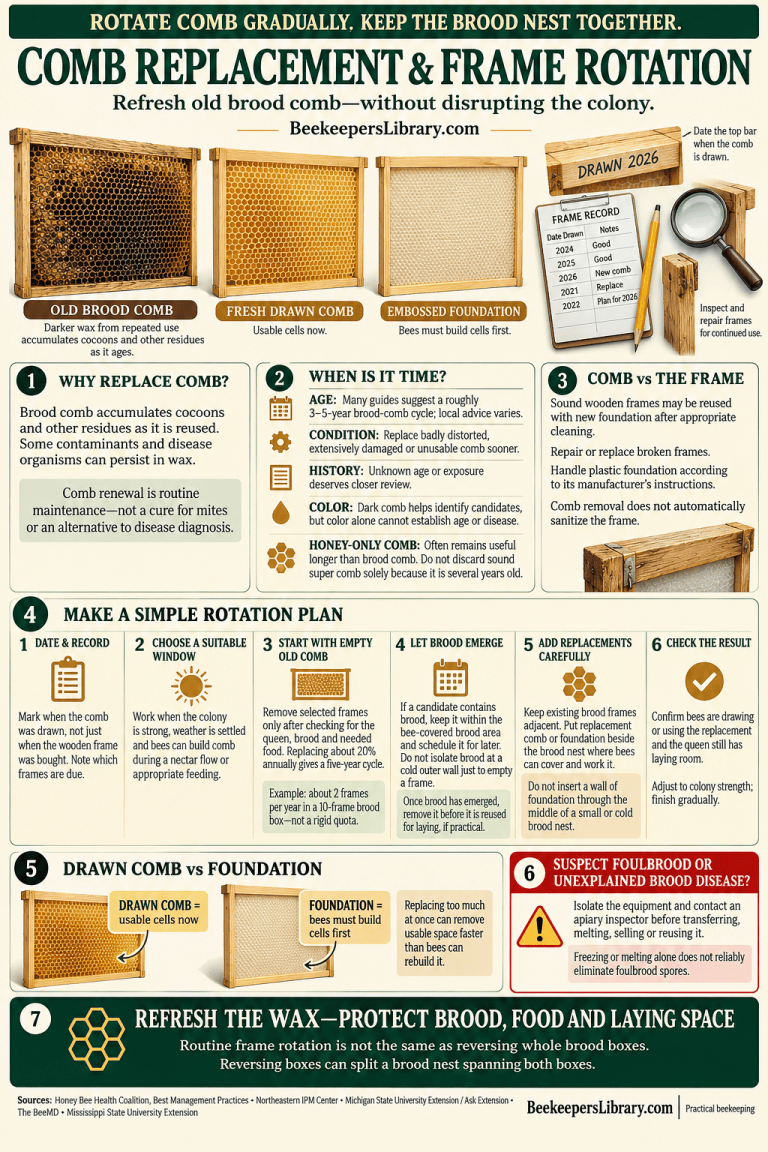
Comb Replacement and Frame Rotation
Read the article →: Comb Replacement and Frame RotationPlan gradual comb replacement, date frames and protect brood, food reserves and laying space.
-
Does Your Hive Need Another Box? — Brood Box or Honey Super
Read the article →: Does Your Hive Need Another Box? — Brood Box or Honey SuperAssess colony space and understand when another brood box or honey super may be useful.
-

Queen Excluders — When to Use One and When to Leave It Off
Read the article →: Queen Excluders — When to Use One and When to Leave It OffUnderstand when a queen excluder can help and what to consider before fitting or removing one.
-

Storing Drawn Comb and Empty Equipment
Read the article →: Storing Drawn Comb and Empty EquipmentProtect drawn comb and empty equipment during storage, including pest prevention and inspection.
-
Using a Bee Smoker — Fuel, Technique and Safety
Read the article →: Using a Bee Smoker — Fuel, Technique and SafetyReview smoker fuel, lighting, gentle use and fire precautions before opening a hive.
Browse all Equipment, Comb & Storage articles · Back to topics ↑
Honey & Hive Products
Harvesting, extracting, warming, authenticity, beeswax and other hive products.
-

Bee Venom Harvesting — What Is That Wired Plate?
Read the article →: Bee Venom Harvesting — What Is That Wired Plate?How bee venom collectors work, what venom is used for, colony considerations and handling hazards.
-

From Frame to Jar — Extract, Strain, Settle and Bottle
Read the article →: From Frame to Jar — Extract, Strain, Settle and BottleFollow the main steps from extracting and straining honey to settling and bottling it.
-

Harvesting Honey — When to Take It and How to Do It
Read the article →: Harvesting Honey — When to Take It and How to Do ItDecide when honey is ready to take and review harvesting methods while leaving adequate colony reserves.
-

Honey Fraud — Real Problem, Verified Facts
Read the article →: Honey Fraud — Real Problem, Verified FactsUnderstand honey adulteration, the limits of common claims and the role of traceability and testing.
-

Honey from China — Processing and Traceability
Read the article →: Honey from China — Processing and TraceabilityExamine honey processing and traceability while separating documented fraud from assumptions based on country of origin.
-

Honey Myths vs. Facts
Read the article →: Honey Myths vs. FactsCommon questions about crystallization, storage, honey varieties, and food safety.
-

How Do Bees Turn Nectar Into Honey?
Read the article →: How Do Bees Turn Nectar Into Honey?Follow the transformation from collected nectar to ripened honey inside the colony.
-

How Honey Bees Make Beeswax
Read the article →: How Honey Bees Make BeeswaxWax production, comb building, and the many jobs beeswax performs in a colony.
-

Warming Honey Without Overheating It
Read the article →: Warming Honey Without Overheating ItCompare practical ways to warm honey while checking temperatures and avoiding hot spots.
Browse all Honey & Hive Products articles · Back to topics ↑
Bee Biology & Behavior
Honey-bee roles, colony life, flight and behavior.
-
Bee Winter Behavior and Roles
Read the article →: Bee Winter Behavior and RolesExplore winter clustering, heat production, colony roles and the importance of stored food.
-

Drone Retirement Home — Short-Term Comfort Care
Read the article →: Drone Retirement Home — Short-Term Comfort CareA warm-hearted guide to identifying male honey bees and offering brief shelter and careful feeding to an evicted autumn drone. These are short-term comfort-care suggestions, not a validated overwintering method.
-
How Do Bees Turn Nectar Into Honey?
Read the article →: How Do Bees Turn Nectar Into Honey?Follow the transformation from collected nectar to ripened honey inside the colony.
-
How Honey Bees Make Beeswax
Read the article →: How Honey Bees Make BeeswaxWax production, comb building, and the many jobs beeswax performs in a colony.
-

Inside the Honey Bee Colony
Read the article →: Inside the Honey Bee ColonyMeet the queen, workers and drones and explore how their roles support colony life.
-
Meet the Winter Bees
Read the article →: Meet the Winter BeesThe seasonal changes that help winter workers carry a colony into spring.
-

The Amazing Honey Bee Flight Engine
Read the article →: The Amazing Honey Bee Flight EngineHow honey bee flight muscles support flight, communication, and winter heating.
-
Winter Bees: How They Survive and Why They Live So Long
Read the article →: Winter Bees: How They Survive and Why They Live So LongWinter bee series, part 1: longevity, colony roles, clustering, and the spring handoff.
Browse all Bee Biology & Behavior articles · Back to topics ↑
Pollinators & Conservation
Native bees, identification and conservation.
-

Bumble Bees Are Fun! — Life Cycle and Pollination
Read the article →: Bumble Bees Are Fun! — Life Cycle and PollinationMeet bumble bees: their pollination, seasonal life cycle, nesting habits and ways to help them.
-

Know the Difference: Honeybee, Bumblebee & Yellowjacket
Read the article →: Know the Difference: Honeybee, Bumblebee & YellowjacketCompare honey bees, bumble bees and yellowjackets so you can tell these common hive visitors apart.
-

The Rusty Patched Bumble Bee — A Native Pollinator in Trouble
Read the article →: The Rusty Patched Bumble Bee — A Native Pollinator in TroubleMeet the rusty patched bumble bee and learn about its conservation needs.
Browse all Pollinators & Conservation articles · Back to topics ↑
Regional guide: Native Bees Near You — Connecticut & the Northeast.
Looking for mite-control information? Visit the Varroa beginner guide, Detect & Monitor or Control & Treatments.